Healthcare doesn’t have an innovation problem. It has an adoption problem.
In a world where we can build almost any healthcare tool imaginable, success still comes down to whether patients and providers actually use it.
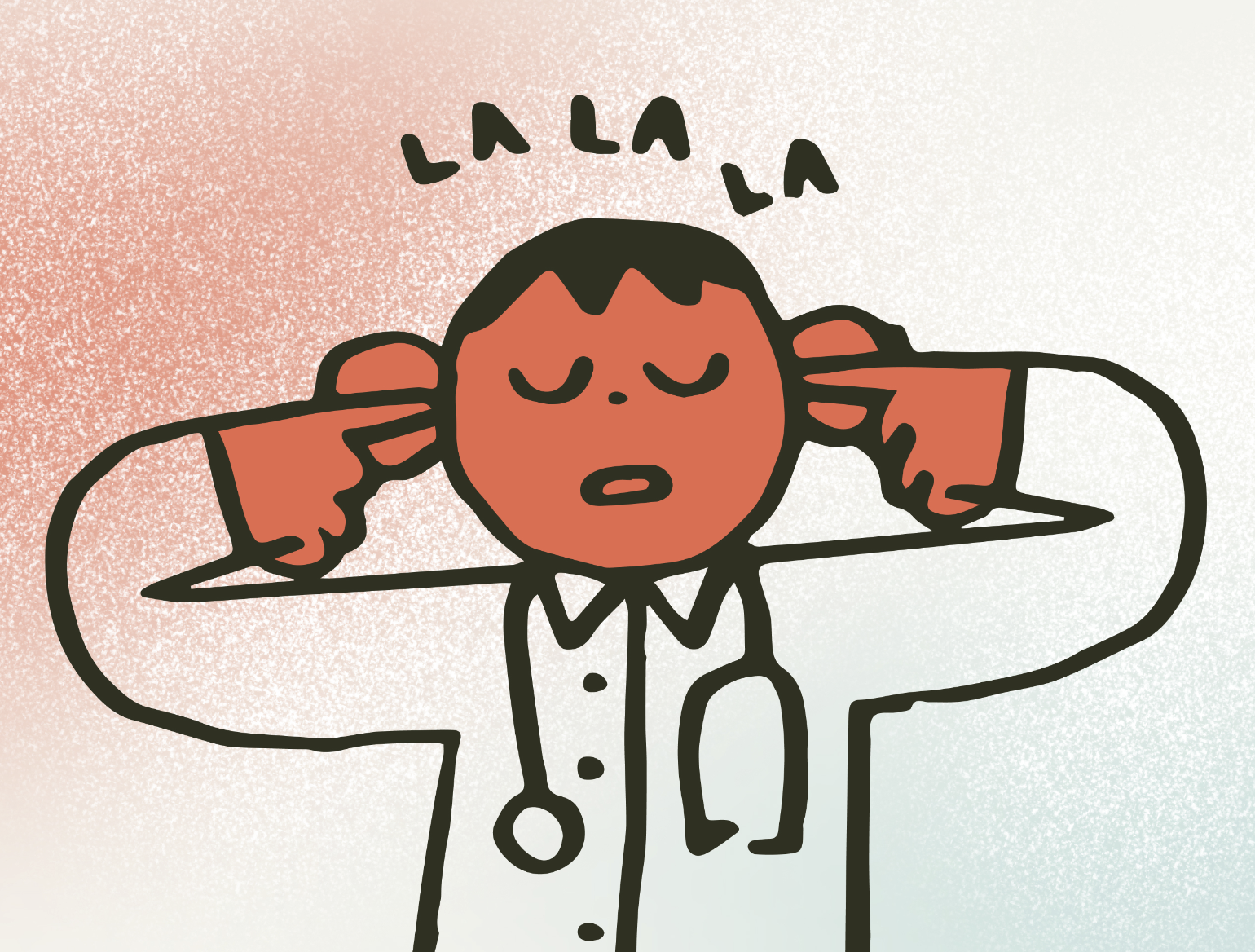
In 2025, we planted our flag in healthcare, an industry we believe has a duty to consider how products and services are used. Since then, we've worked with health systems, digital health companies, biopharma teams, and more. Across very different products and services, we kept getting called to solve a similar challenge:
People weren't using what had been built for them.
This may sound like an obvious problem. You build something + no one uses it = bad. But here’s where it gets tricky…
Unlike consumer products, healthcare users rarely wake up looking for your thing. A patient gets enrolled because their health plan signed a contract. A provider gets a new workflow because their hospital's leadership approved it.
The person who decides to buy your tool is almost never the person who has to use it. These tools are paid for by health plans or hospital systems with the promise of reduced cost.
The tools deliver on that metric…
…if they are adopted and activated.
The problem to be solved becomes: if the tool saves time, improves outcomes, and reduces costs, why isn’t it being used?
Or, for some companies, how do they make sure it’s going to be used before launching and promising the world to the ones who hold the purse strings?
This is the exact question we’ve worked through for clients like Cortica, SonarMD, and a large multinational biopharma company.
Why good tools still fail
The heart of the issue is understanding behaviors, workflows, and environments.
Most products are built around features and ideal workflows—what the product can do, in the conditions where it should work. The problem is that healthcare doesn't happen in ideal conditions.
And, in a world where it’s becoming increasingly cheaper to design, build, and deploy, every pain point has five tools to address it. There are, perhaps, too many choices and new things to learn in a field where time and attention are increasingly demanded. How does your solution stand out?
Other times, tools force people into a workflow that’s incongruous with the way they work, think, or behave.
Sometimes, the tool is too simple.
Sometimes, too complex.
Sometimes, it lacks nuance.
Sometimes, it’s just not urgently needed.
It’s not only about a streamlined onboarding or a more visual landing page. Clients may come to us asking for wireframes, but what they really need is for people to change behavior.
The details vary but our approach is simple: deeply understand your human users because the real barrier is behavioral, and you can't find it by looking at your product. You find it by understanding the people who are supposed to use it — their mental state, their environment, what else is competing for their attention, the twelve other things running through their brain.
We pair this with behavior science principles: limiting recall, giving people flexibility, elevating accessibility, creating psychological safety, delivering just-in-time support, adding or removing friction, and more.
This is a board-level problem too
When adoption doesn't materialize, it's not just a clinical problem. Investors funded the promise of scale. Health system partners signed contracts built on utilization assumptions. And now someone has to walk into a board meeting and explain why the numbers aren't where the model said they'd be.
The companies that get ahead of this — before launch, before renewals, before the next raise — are the ones who treat adoption as a design problem from the start, not a communications problem after the fact.

ZoCo brings together healthcare UX, product strategy, and behavior design
Our team is uniquely qualified to dig into the mess that is healthcare and translate it into equitable, effective solutions.
At the end of the day, your product can only do so much on its own. It’s the people—patients, providers, members, caregivers, and internal teams—who determine whether a product, service, or initiative succeeds.
So whether you need to gain adoption to improve patient outcomes, improve member experience, increase adherence, gain provider buy-in, communicate more clearly, or something else entirely—we’re here. We’ve driven change for these goals and more.
Do you have an adoption metric you’re trying to move? Let’s chat.
Check out our Ultimate Guide to UX Research & Product Design Services
Looking for insights for healthtech product leaders, delivered to your inbox every few weeks? Sign up for our newsletter.

.svg)
.svg)
Currently exploring
Working with ZoCo


%20(1).png)
.svg)
.svg)

